


Environment · Excursions
La Fageda d’en Jordà
In Garrotxa, about 35 minutes away
A forest that grew on lava
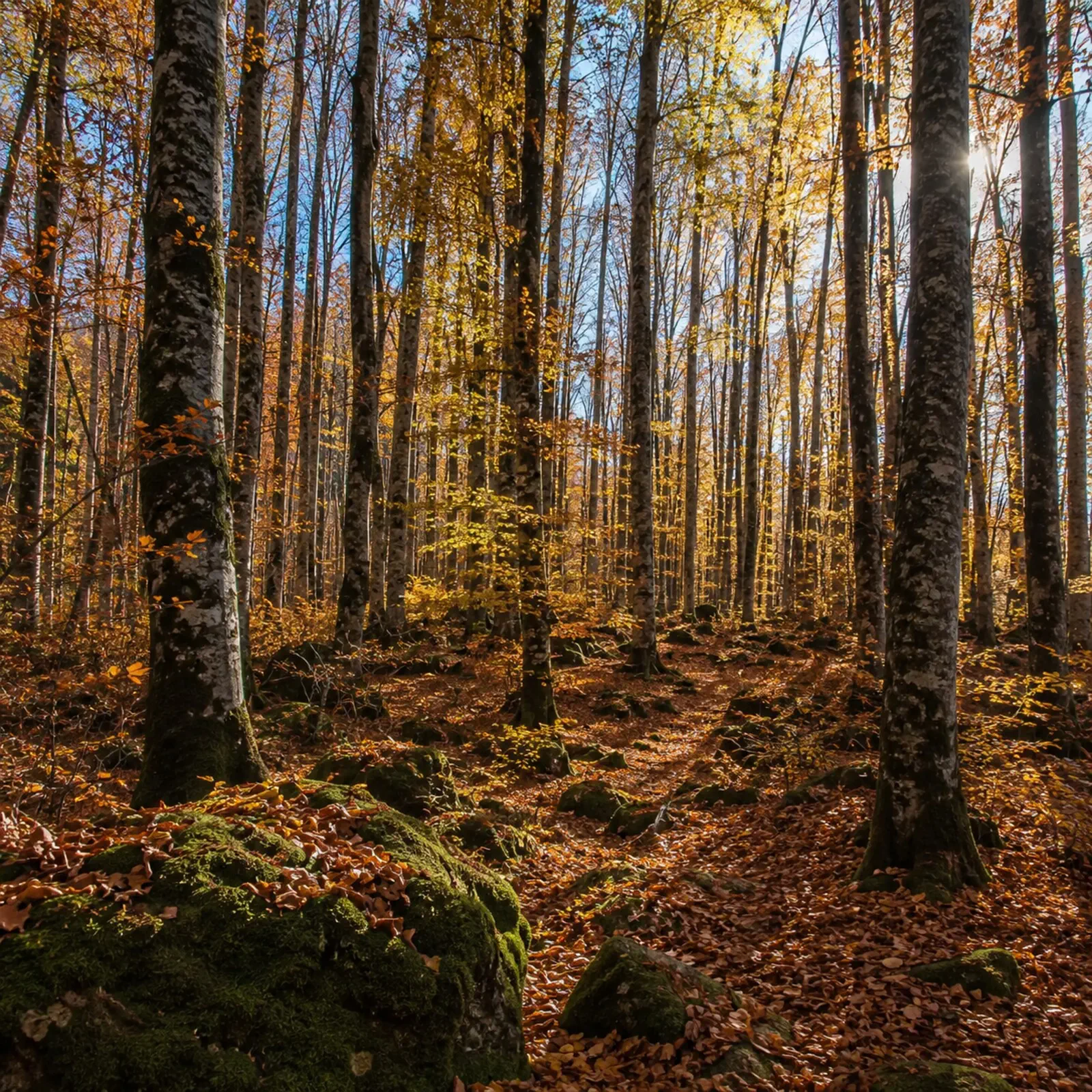
Fageda d’en Jordà a flat beech forest, a rare find, which grew on the lava flow of the Croscat volcano. It is part of the Natural Park of the Garrotxa Volcanic Zone and can be explored on foot, by carriage, or with a visit to the cooperative that makes its yogurt.
Distance
about 30 km
By car
about 35 min
For families
Yes
The forest
They’re making a big deal out of nothing.
In Catalonia, I live alone above 1,000 meters. Here it grows at 550 meters, and the reason is below: the Croscat lava flow left a porous terrain that retains moisture and keeps the soil cool year-round. The result is a flat beech forest—there are hardly any left—where the trees grow straight up and the light filters down to the ground. Joan Maragall dedicated a poem to it that everyone still knows, and that perfectly captures the feeling of stepping inside: that of suddenly finding yourself in a secluded, peaceful place.
In the carriage
Travel it without walking
From the Can Serra area, horse-drawn carriages set off on a tour through the interior of the beech forest. It lasts about an hour, and the guide explains how the forest was formed and what you can see. It’s the most comfortable way to do it with young children, the elderly, or if the weather isn’t suitable for walking. It’s booked separately, and weekends in October and November fill up.
The cooperative
The yogurts made right here
La Fageda is also a cooperative founded in 1982 that makes yogurt, ice cream, and jams, and employs people with intellectual disabilities or mental health disorders from the region. You can visit the farm, see the cows, and finish with a tasting. The visit must be booked in advance—you can’t get in without one—and it’s one of the few activities in the area that kids and adults alike enjoy.


When to go
Autumn is the classic, but not the only one.
October and November are the postcard months, with yellow and brown covered in fallen leaves, and also the busiest. In spring the green is fresh and there are far fewer people; in summer the forest stays cool when it’s hot outside, which it often is; and in winter, without leaves, you can see the lava’s contours beneath the trees, which remain hidden the rest of the year. It’s worth arriving early at any time of year.
Before going there
Three things you should know
How to get there
About 35 km via Olot and the Santa Pau road, about 35 minutes.
Where to park
In the Can Serra area. You have to walk through the woods from there.
What to reserve
The carriage ride and the farm visit are booked separately in advance.
Do you want to do a few of them during the same stay?
We have bungalows, rooms in the farmhouse, and pitches. All right on the trail.